Thesis
Curren Bouquetd’or does not have a wound about losing. Everything on the surface is arranged to make you think she does, the nickname, the Silver Collector, the long row of second places, the top step she never reached, and the reading writes itself: an ache for the win that never came. That reading is wrong. Her pain sits upstream of winning and losing entirely. What hurts her is not that she came second; it is that a race is a thing you win by taking.
Bring the bouquet out from behind her back, and this is what she is holding:
Curren Bouquetd’or is a girl who cannot conceive of a victory in which no one is hurt. Because a race is something you win by taking, the place, the gap, the lead someone else wanted, she experiences competing as a violation of the harmony she fell in love with, and her whole story is the search for a way to win that requires no one to lose. She finds it by turning victory into a gift: a bouquet handed to someone whose worth, like her own, the record refuses to show. The gift heals her. It is also her cage, the thing that lets her spend everything making others visible while she chooses, gladly and fearfully, to remain the flower in the shade.
The chapters below take it apart one stem at a time: the gentleness that costs her races, the flower-cosmology she sees the entire world through, the trainer she chooses, the way the gift cures the giver, and the darker thread underneath it, the fear that the one person who sees her will one day let her go.
Part 1The Real Horse
You cannot read the character correctly without the horse, because the writers built her almost entirely out of the historical record, and the record is unusually poignant.
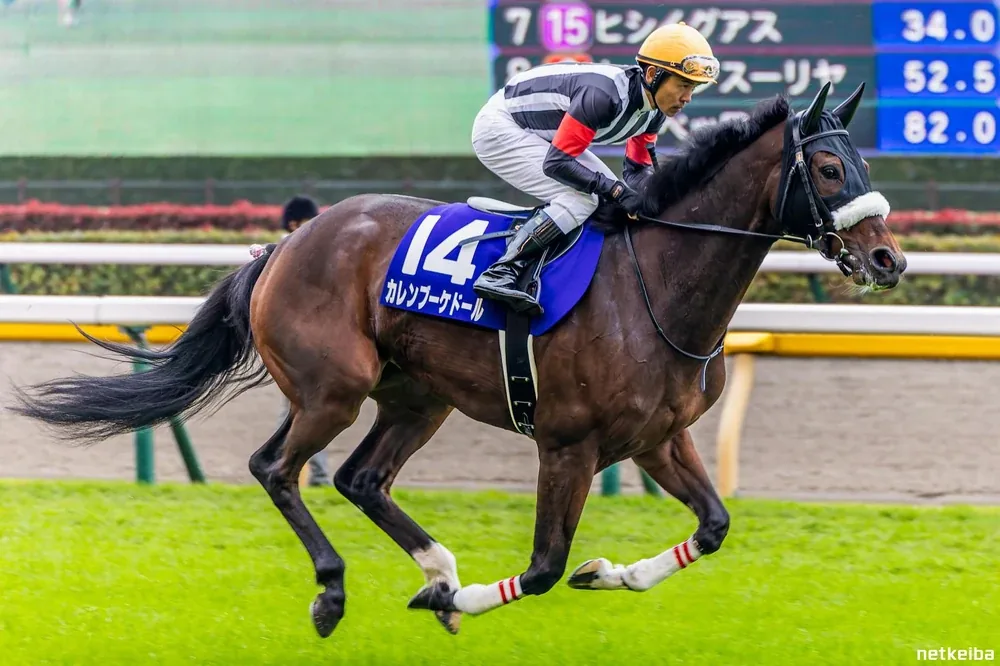
Curren Bouquetd’or (2016, by Deep Impact out of the Chilean mare Solaria) ran from 2018 to 2021 and won exactly twice, neither time in a graded race. Around those two small wins she assembled a record that became first a national in-joke and then a national affection: six graded seconds and two graded thirds, and not one graded victory. Three of those seconds were Grade 1s, all in her three-year-old season of 2019, the Oaks, the Shuka Sho, and the Japan Cup. She opened her career with sixteen consecutive in-the-money finishes, and the streak broke only in her second-to-last start. The fandom name for this is shirubaa korekutaa, Silver Collector, and she is one of Japanese racing’s defining examples of the type. Always there. Always close. Never first.
The cruelty sharpens in the money. Her career earnings made her, at retirement, the top earner among every horse her owner ever raced under the “Curren” prefix, ahead even of Curren Chan, who actually won Grade 1 sprints. She out-earned the winners by being reliably, honorably second. The whole tragedy compresses into that fact: a fortune assembled out of near-misses.
The specific losses matter, because their shape became her character. In the 2019 Oaks she came from twelfth favorite to lose by a neck to Loves Only You. In the Shuka Sho she was beaten by Chrono Genesis, and the verdict on the day was blunt, the winner’s turn of foot was simply better. In the Japan Cup she ran as the lone filly in the field, the kouitten, the single point of crimson among the colts, Grade-1-winless yet sent off fifth favorite on sheer respect; she led into the straight and was caught by Suave Richard, beaten three-quarters of a length, her third consecutive Grade 1 second. Her jockey said only, “Truly, truly frustrating.”
Look at how she lost and you find how she ran. The contemporary form analysis describes a forward-positioned, tenacious, speed-sustaining type with no decisive turn of foot, a filly who could hold her speed without tiring even as the pace lifted, but who struggled the instant a race became a slow-paced, sharp-finish battle. She was not a pure stayer; her best trip was genuinely unclear, since she placed at everything from 1600 to 3200 metres. What she lacked was the killing acceleration. She would sustain her run to the leader’s flank, and the sharper horses would go past. The way she lost was built into the way she ran, and the way she ran is the first thing the game converts into a soul.
Two further pieces of the record carried straight into the adaptation:
- The owner and the eyes. Suzuki Takashi runs an eye clinic, and asked why he bought her, he said that, given his profession, the shine in her eyes was a deciding factor. An ophthalmologist chose her for her eyes.
- The one brush with history. At the 2021 Tenno Sho (Spring), the 3200-metre stayers’ classic, she finished third, and in doing so became the first filly in the graded era to finish in the top three of a Japanese flat Grade 1 at 3000 metres or beyond, and the first filly to place in that race since 1965. The one time she touched history, she touched it not by winning but by enduring a distance fillies are not supposed to survive. Even her triumph was a placing.
She was retired in late 2021 after a suspensory ligament problem, having never won the graded race her name promised, and went to stud. And she was beloved far out of proportion to her record, a fan vote to choose an “idol horse” placed her fifth. People did not love her in spite of the losing. They loved her for how she lost: honestly, consistently, close, without ever once becoming someone uglier in order to win.
Her name holds the whole irony in three words. “Curren” is her owner’s stable prefix. “Bouquet d’or” is French for golden bouquet. The registered meaning on file with the racing authority is, in plain terms, may she bloom the great flower of victory. She was named for a winner’s bouquet, and she spent her entire career handing that bouquet to someone else.
A note on what the game changes. The real horse was a mare, so there is no sex-change to read around. The most significant invention is the family: the game gives her a father who runs a hospital, plainly the ophthalmologist owner refracted into a parent, and keeps the mother as a runner from another country, the Chilean dam Solaria. Almost everything else, as the rest of this study shows, is the record turned up to the level of feeling.
Part 2The Thorn: A Victory in Which No One Is Hurt
Start here. Every other stem in the arrangement is wired around this one.
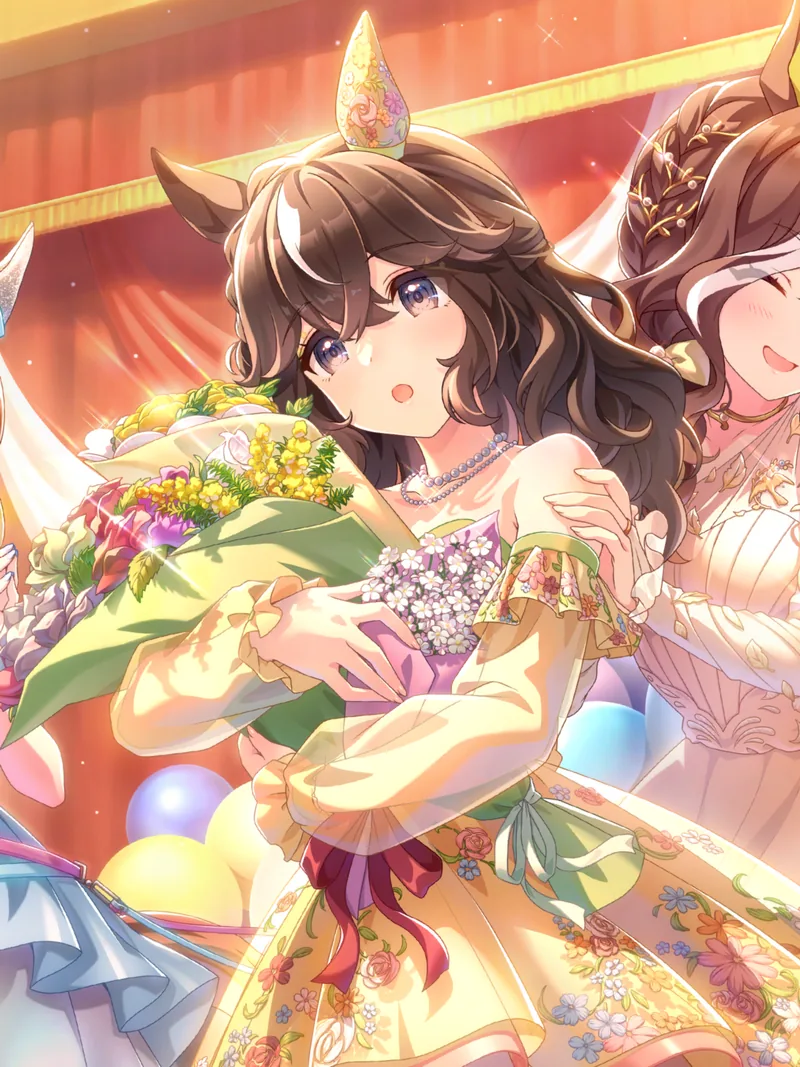
She tells you the problem in the first lines she ever speaks. Asked to introduce herself, she lists arranging flowers among the things she loves, and then, haltingly, admits the thing an umamusume is not supposed to admit:
「争いごとは――少し、苦手かもしれません」 “Conflict, competition, I might be a little bad at it.”
The tension is not hidden under the character. It is the first thing she says.
What drew her to racing was never the winning. It was harmony. Her image of a race is many runners, each a different color and passion, briefly becoming one beautiful thing, and the word she reaches for is the obvious one. As a child watching, she does not say she wants to win:
「レースって、みんなでひとつになって――花束みたい」「いいなぁ……わたしもいっしょに、花束になりたい」 "A race is everyone becoming one. Like a bouquet. ...I want to be part of the bouquet too."
Her own name is not an aspiration to be the single winning bloom. It is a wish to be one flower among many in the arrangement.
Then she meets the structure of the thing she loves, and it will not let her have it. In early training a gap opens in front of her and she will not take it, and the reason is not fear of losing:
「割り込んだら、ご迷惑になってしまうのではと……」 “If I cut in, I might be a nuisance to them…”
Her courtesy is the thing that costs her the race. And she does not draw the self-pitying conclusion that she is too nice to win. She draws a far harsher one: because she cannot burn with the same competitive heat as everyone else, she is polluting the harmony she came for.
「同じ熱で応えられない。不協和音を生んでしまう」 "I cannot answer with the same heat. I create dissonance."
「勝ちたいと、あんなにも心を燃やす、みなさんに対して。私の走りは――誠実とは、言えない」 “Toward everyone who burns so hard to win, my running cannot be called sincere.”
Read what she has done to herself. Everyone else offers the race their full fire; she cannot, and so she experiences her own gentleness as a betrayal of the people she races. Her earnestness is so total that it turns against her. She is not too timid to compete. She is too earnest to forgive herself for not wanting to hurt anyone.
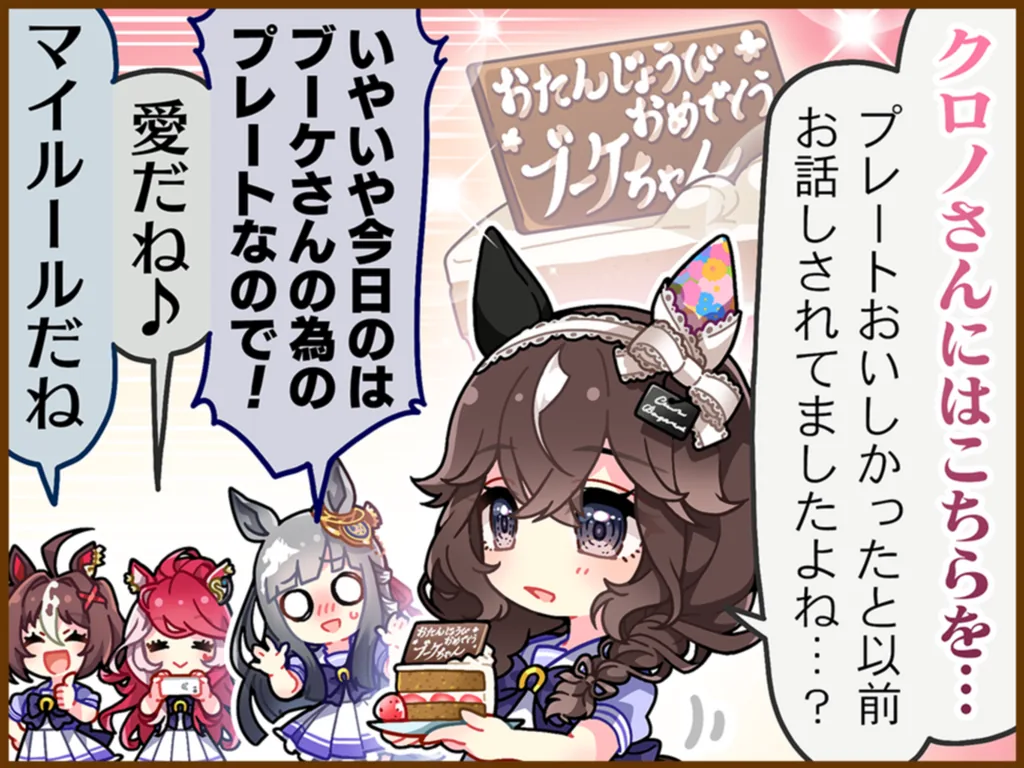
The cleanest statement of why racing specifically wounds her comes, of all places, in a comic vignette. Handed a fighting game by a bully, she is hopeless, 「暴力をふるうのは、ついためらってしまって」, I just hesitate to use violence. She cannot make herself attack the opposing character. So she finds another way to win: she selects a monk whose hidden technique is to dodge twenty consecutive attacks by bowing politely, then persuade the opponent into surrender, to win, as she delightedly puts it, 相手を傷つけず、説得して勝つ, defeating no one and persuading instead.
The scene is a joke, and it is also the whole tragedy stated cleanly. She is desperate for a victory condition that hurts nobody, and she can find one in a video game and not in a race. A race has no monk’s ending. You cannot win it by bowing. That is the exact shape of the thing she cannot do, and the exact reason it hurts.
Part 3The Hospital: The Root of Harmony, and the Habit of Seeing the Unseen
The root of all of it is not on a racetrack. It is in her father’s hospital, and the game is explicit about it.
As a child she spent time in the wards, and she noticed that the patients were always gazing out the windows, longing for the free world outside the closed, cold building. She asked her father how she could help, and his answer is the seed of her entire psychology:
「自分だったら、と置き換えてみる」 “Try putting yourself in their place.”
So she filled the wards with flowers, and the patients came alive, one tells her that the smell of flowers is the smell of being alive. And when she asks her father what to call the feeling of frightened, suffering hearts settling into peace, he gives her the word she will organize her whole life around:
「その言葉を、初めて知ったのは、あの時でした」 “That was the first time I learned the word”, 調和, harmony.
Two faculties are born in that hospital, and both run straight to the trainer. The first is her ethic: harmony is flowers bringing peace to people in pain, and her job is to make it. The second is rarer and more important. Her father taught her empathy as an act of imagination, placing yourself inside another, and the hospital taught her to read the unspoken longing in people who cannot voice it.
You watch the same faculty fire in another comic scene, this time at a horror film. Everyone else is frightened of the ghost; she weeps, because she perceives that the ghost is really a small lost child saying I’m lonely, help me, chasing people because being alone is frightening. She had caught the detail nobody else did: a memorial photograph in the opening shot.
This is why, when she meets a trainer whose real worth is invisible to the world, she cannot look away. He is the patient at the window. He is the lonely thing behind the frightening surface. Her gift for seeing the unseen, learned at her father’s hospital, is precisely what fixes her on a man the record refuses to see. And the adaptation is quietly perfect here: the real owner, an eye doctor, chose her for her eyes, and the game gives her a father whose hospital taught her how to see.
Part 4The Motif System: Everything Is a Bouquet
The writers did not give her a flower hobby. They gave her a flower cosmology, and nearly every line she speaks runs through it.
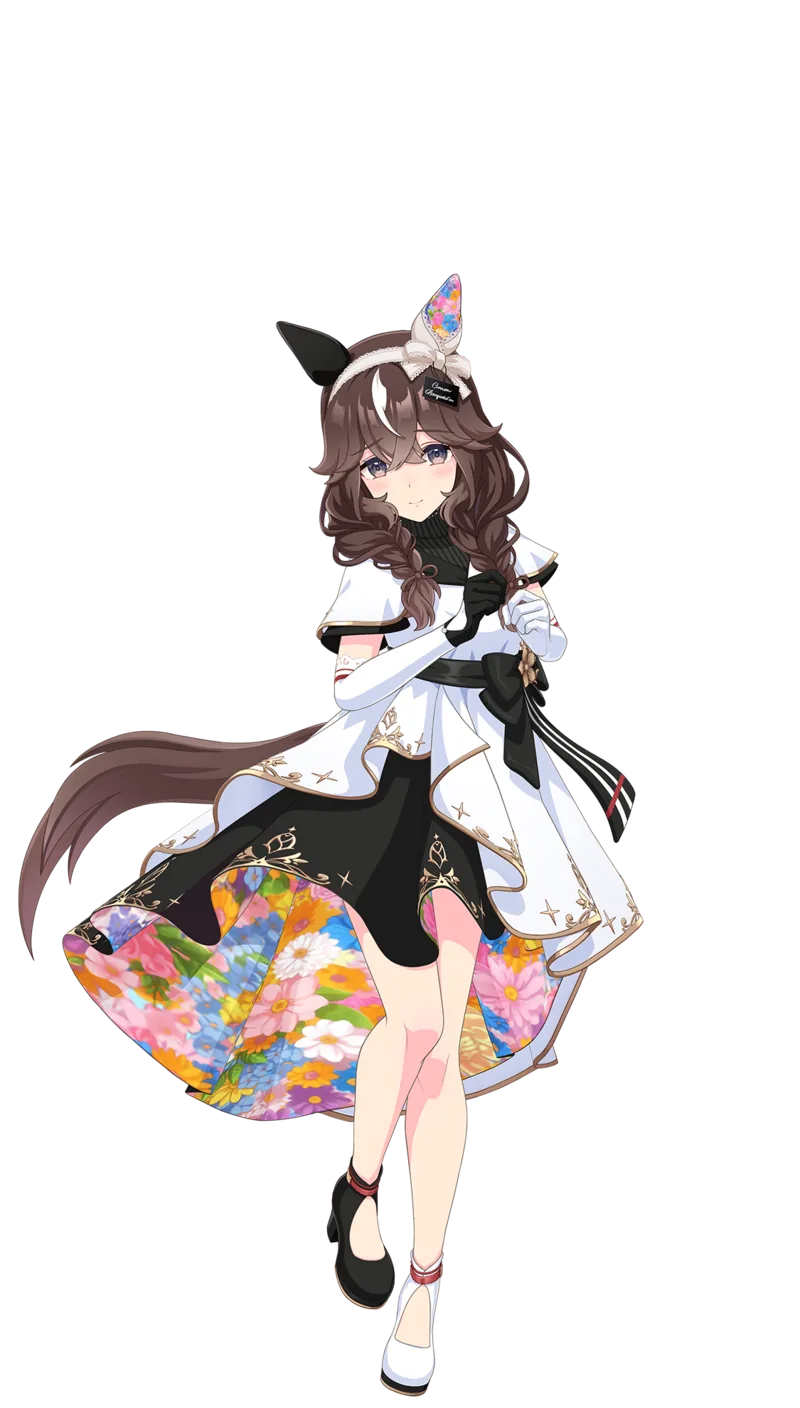
The bouquet is not a metaphor she reserves for races. It is the lens through which she perceives all of life. She describes a packed lunch as 小さな箱庭で生まれる調和, harmony born in a small box garden. She frames coordinating an outfit as deciding how to 調和させ、束ねる, harmonize and bundle. New Year decorations, Christmas illuminations, a choir, regular sleep, a children’s game tournament, she reads every one of them as an arrangement, as separate elements bundled into something balanced. She is not applying floristry to racing. She is applying her single unified theory of the good, harmony, to everything, and a race happens to be the one place that theory breaks.
Her definition of harmony is specific, and it is the opposite of blending. Helping two rival dancers, she reads one as a red rose and the other as a blue rose and tells them:
「お互いの存在が、お互いの存在を美しくする」「それぞれの素晴らしさが調和する。それ以上に特別な美しさはない」 “Each one’s existence makes the other’s beautiful. Each one’s splendor harmonizing, there is no beauty more special than that.”
Harmony, for her, is distinct things made more vivid by each other’s presence, never sameness. This is the value a zero-sum race most offends: in a bouquet every flower is enhanced by the others; in a race the others are obstacles to be beaten.
From this come the recurring images, consistent enough to track:
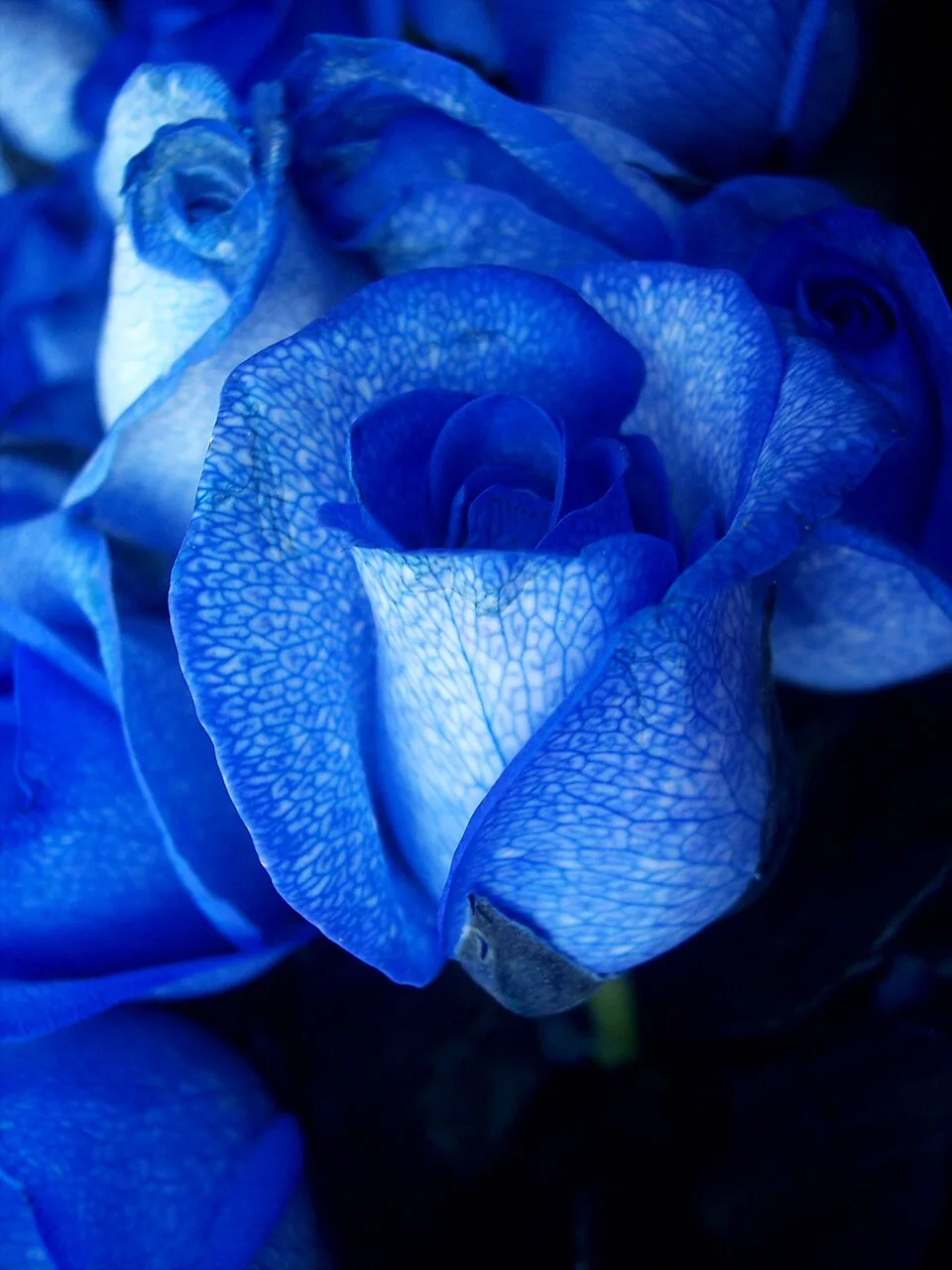
- Flowers as people. She reads everyone as a specific flower. Loves Only You is a red rose, passionate and present, yet harmonizing. Almond Eye is the great dahlia, above the clouds. The blue rose, a flower that does not occur in nature, and so means the impossible made real, the embodiment of a dream, she reserves for dreams and miracles. This is not decoration; it is how she thinks about who people are.
- Waiting and blooming. Her philosophy of time is a gardener’s: 「待つことは、喜びへの準備ですから」, waiting is preparation for joy. Because you tended and waited, the joy when the flower opens is greater. For an umamusume whose whole career was a string of not yet, the game hands her a worldview in which the not-yet has dignity. Whether that is wisdom or a beautiful way to bear perpetual deferral is a question this study returns to.
- Light and shade. The central social axis of her story. The world divides into those the light falls on and those it does not, and she has appointed herself to move the unseen into the sun. Tellingly, when she tends a real seed, she wants it planted 「みんなの目に映るような」「陽の当たる場所」, somewhere visible to everyone, in the sun. She seeks the light relentlessly, for the flower, for the trainer, never for herself.
- The crown. The real horse was mukan, crownless, the uncrowned collector of silver. The game knows this and pays it off: the trainer weaves her a crown of flowers and tells her 「君は誰より、冠がふさわしい」, you deserve the crown more than anyone. The title the racing world never gave her, the one person who truly sees her gives her, made of flowers.
- The sun. Her dam is Solaria, the sun, and the motif is seeded from the pedigree up. Her profile notes that days out with her mother are always clear skies; the bouquet she imagines for her mother is built from colors that image sunlit warmth. And in the story’s tenderest moment the trainer nearly calls her 「君は俺の――太陽」, you are my sun, the light glinting off her hair as he stops himself.
- Can’t reach. Her trauma-word is 届かない, I can’t reach, what she says in the recurring image of the race she cannot close, and what she says when she is beaten in the biggest races. The perpetual near-miss rendered as a single verb.
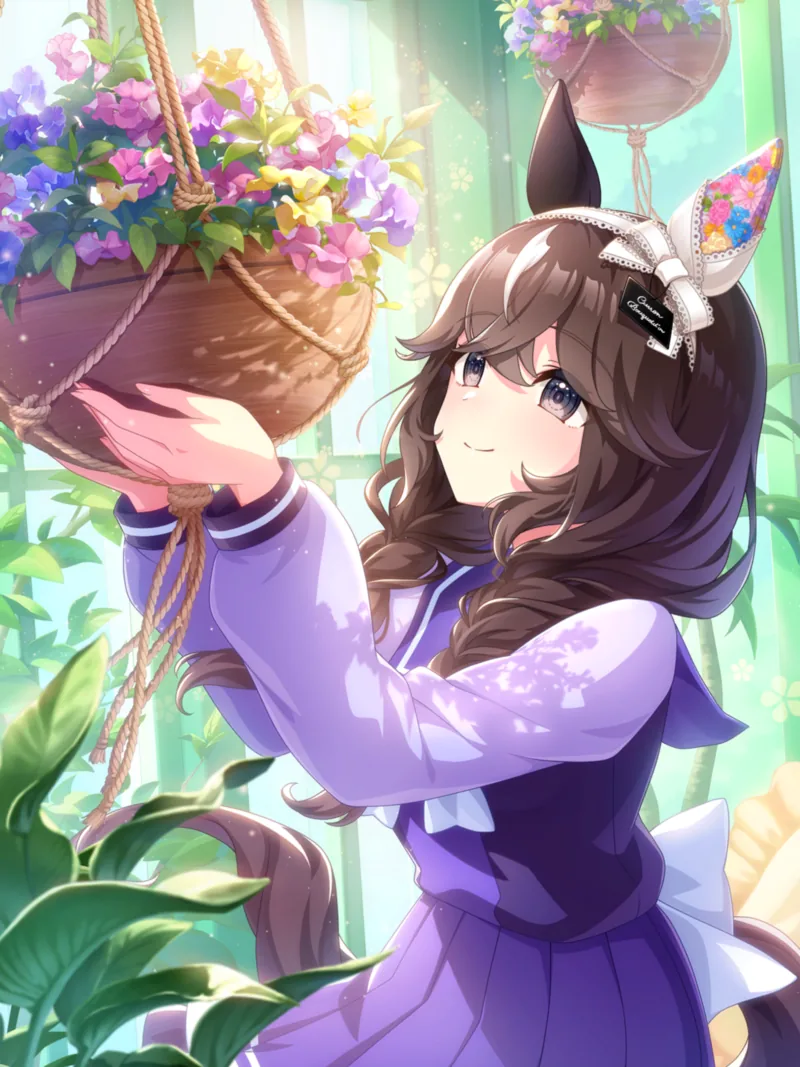
One thing English cannot fully carry, worth a translator’s note for anyone reading her only in localization. Her name is a bilingual pun the Japanese keeps live: 黄金の花束, the golden bouquet she vows to assemble, is literally her own name, Bouquet d’or, spoken back to her as a goal. Every time she says she wants to make a golden bouquet, she is saying she wants to become the thing she was named for. And her register, an extreme, soft, halting politeness full of ellipses and honorifics, is so much a part of her self-effacement that flattening it into plain English loses a real part of the character. She speaks the way she runs: never pushing to the front of her own sentence.
Part 5The Resolution: The Gift Cures the Giver
The turn comes when she stops trying to want victory for herself and finds someone to want it for. She asks a former assistant trainer, a man with a blank record who has spent his career doing uncredited help, to take her on, and she gives him a reason that finally lets her run. Watching Almond Eye’s dominance, she had noticed that a great enough win pulls the light onto the people behind the winner, the ones who made her. So if she can win like that, she can drag this invisible man into the sun. Her ambition is born entirely as a gift to someone else.
Why him, of all people? He is not an arbitrary love-object. He is the patient at the window, the exact thing her childhood at the hospital trained her to see: real worth, longing quietly to be recognized, that the world walks past. The faculty that makes her weep for a lonely ghost is the faculty that fixes her on a trainer the record ignores. She is doing, as an adult on a racetrack, what she did as a child in the wards.
And the reframe solves her impossible problem. If a victory is a flower, and flowers are given, then winning is no longer taking the place someone wanted. It is assembling a bouquet to hand to someone:
「この両手にあふれるほどの、勝利を束ねて。黄金に輝く花束を、あなたに届けたい」 “I want to bundle an armful of victories and deliver you a bouquet shining gold.”
Victory becomes generosity, the only frame in which she can bring herself to burn. And when she finally does, the game marks it with the eyes the real owner chose her for: 「その瞳に鋭い光が迸った」, a sharp light burst in her eyes. Note, though, what the game refuses to do even at this breakthrough: in the race where she first truly fights, she still loses. The Silver Collector is honored even in her moment of transformation.
The cure completes itself in a quiet Christmas scene, and it runs backward through everything. Exchanging flowers with the trainer, she realizes what the whole project was secretly for:
「全てはあなたのためにと、集めていたつもりでしたが――今思えば、あの一輪一輪は――私の自信に、繋がっていました」 “I thought I was gathering it all for you. But looking back, each single flower became my own confidence.”
「あなたへ花束を渡しながら、私は――私自身にも、花束をあげていたのかもしれません」 "While handing you the bouquet, I may have been giving myself one too."
The original wound is named and closed in the same breath, 「私はレースの調和を乱しているのかも、だなんて。そんなことはもう、思ったりしないもの」, I don’t think anymore that I’m disrupting the harmony. She gives him a blue rose, the flower that should not exist, meaning the impossible made real: the miracle of having met him. The gift, aimed entirely outward, healed the giver. By the end she can even say the thing that was once impossible for her, that competing and harmonizing in succession is what becomes 歴史という名の輝き, the brilliance called history. The race and the bouquet are no longer at war.
That is the redemption, and it is real. The rest of this study is about why it is not the whole story.
Part 6The Shadow: Invisibility, Self-Erasure, and the Fear of Being Left
The same gift-logic that saves her is also the architecture of her flaw, and the game is unusually willing to show it.
Start with the structural trap. Her entire mission is to make her trainer visible, but her dream generates no public interest, and the story names exactly why. Its center is a nobody:
「その夢の中心が、無名の俺……だから?」 “Because the center of that dream is me, a nobody?”
Her devotion is self-defeating at the root. The invisibility she is trying to cure is the very thing that makes her cure invisible. And it does not resolve when she wins. Even taking a Grade 1, the cameras swing to the more charismatic rivals, the features and the trending posts go to Loves Only You and Chrono Genesis, and she thinks 「やっぱり、世間の注目は、集められなかったのね」, I still couldn’t gather the world’s attention. This is the deepest truth the game tells about her, and it holds across every branch, win or lose: winning was never the same thing as being seen. Two people whose worth the record will not record, bound to each other, each the only place the other is visible, and the bond itself keeps both of them in shadow.
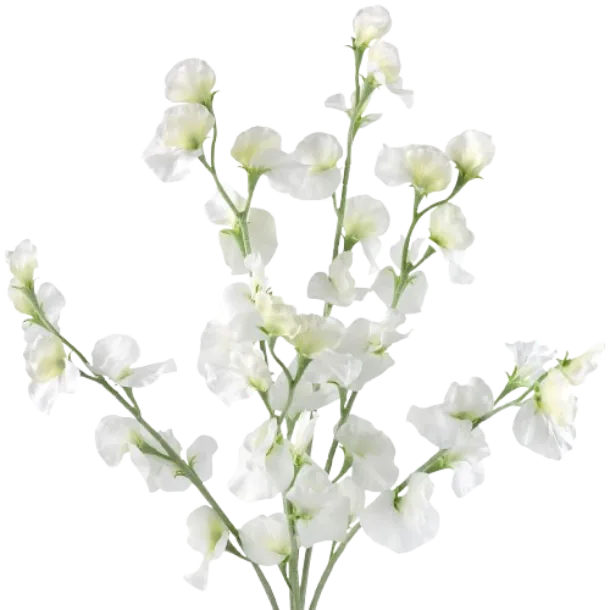
Then there is the self-erasure, and the game stations a whole chorus around her to mark it as a problem rather than a virtue. Her childhood friend Curren Chan tries to make her a pampered princess for a day, and she ends up secretly preparing the snacks anyway, prompting Curren Chan to wonder aloud how anyone is supposed to get her to let herself be cared for. Her friends throw her a surprise party and Loves Only You physically installs her in the center, because 「調和のとれた、キレイな花束にならない」 without her there, the bouquet is unbalanced if she stands at the edge. The seed she tends most lovingly is a sweet pea, her own signature flower, which she hopes will bloom somewhere sunny and visible and comfort people: she pours into a flower the wish for light she will not claim for herself. The cost shows bodily, too, she loses sleep worrying whether she changed the water in flowers arranged for others; her hands chap from the water-work and she will not stop, then frets that her chapped hands might worry someone.
The selflessness is not free. It is quietly eating her, and she hides the eating, and then worries that the hiding is a burden.
And underneath all of it runs the darkest thread, the one that keeps the warm reading honest. In a daytime nap she dreams the trainer is packing his things and leaving, and she cannot keep the panic out of her voice:
「待って、嫌! 行かないで……! どこにも、行かないで――!」 "Wait, no! Don't go! Don't go anywhere!"
The placement is pointed. The dream comes just after a famous veteran trainer has given her the spotlight her own trainer could not. The fear writes itself: if I cannot make him shine, if someone better can do what he cannot, will he leave? Will I be handed off, set aside, left?
This reframes the gift, and it is why the thread belongs woven through the whole arrangement rather than tucked into a footnote. Her devotion is not pure altruism. It is also a bid against abandonment. The constant terror of being a 迷惑, a nuisance, is at bottom a fear of being unwanted. And it surfaces, undisguised, in the only selfish thing she ever asks. At the very end, with the trainer finally in the light and her mission accomplished, she makes one request, not to win, not to be famous:
「隅でも、かまいませんので――私の花束を、飾り続けて下さい」 "A corner is fine. Just keep my bouquet on display, always."
The girl who feared she was a nuisance and tried to dissolve into the harmony asks for exactly one thing, and it is to be kept. The true ending is even titled with the wish, the flower-scape that will not come undone. She gives, in the end, so that she will not be untied. The gift that cured her is also the leash she ties to her own neck, and she ties it gladly, because the one thing she cannot bear is being let go.
The text, to its credit, does not endorse this. The trainer’s closing turn is discomfort with it, 「なぜ、己を端に置くことに、一切のためらいがないのだろうか」, why does she put herself at the edge without a shred of hesitation? He wishes she were the one in the center. The game knows her self-erasure is a wound wearing the costume of a virtue, and it lets the people who love her say so.
Part 7The People She Reads as Flowers
Her relationships are best understood through the one she has with the trainer, because he is her mirror. Both are talented and uncredited; both put themselves at the edge by reflex. The cruelest irony in her story is a support-card scene in which she gently lectures the overworking, self-erasing trainer:
「みなさんの幸せには、あなた自身の幸せも、含まれているべき」 “Your own happiness should be counted inside everyone’s happiness.”
She can see his self-neglect with perfect clarity, because seeing the unseen is her gift, and she is entirely blind to her own. The same empathy that lets her read him is the empathy that erases her.
Three rivals matter, and all three are rooted inside her own story rather than imported comparisons:
- Almond Eye, the great dahlia, the era’s queen, names Bouquet’s wound from the outside. She knew her as 「誰よりも優しくて、だから勝負が苦手な子」, kinder than anyone, and therefore bad at competing, and she worried, because a world where you must kick others down is a painful place for someone that gentle. When Almond Eye sees the transformed Bouquet burn at the Takarazuka, she is moved enough to demand a Japan Cup meeting. The era’s best validates the whole arc. (That the two share a dorm is a nod to the real Kunieda stable both came from.)
- Loves Only You, the red rose, the runner who beat her by a neck in the real Oaks, is the game’s study in contrast: an umamusume whose worth is visible and adored, win or lose, because of the community of love around her, set against Bouquet whose worth registers nowhere. Two kinds of being seen.
- Chrono Genesis is the most quietly painful. She and Bouquet are written as twin temperaments, two retiring girls who defer to each other so endlessly they settle things with rock-paper-scissors, and yet Chrono ascends to Grand Prix fame while Bouquet does not. The same gentleness, two different fates.
Behind them stand the family the game invented from the pedigree. Curren Chan, the owner’s real Grade-1-winning stablemate, becomes a childhood friend who cannot get Bouquet to stop serving her. The mother is Solaria, the sun, the warmth Bouquet wants to bottle in a bouquet. And the father and his hospital are the origin of everything, the place she learned the word harmony and the habit of seeing the unseen.
Part 8How She Runs, and What Her Losses Mean
Her running style is her psychology in physical form. She is one-paced, a tenacious sustainer with no decisive turn of foot. She reaches the leader’s flank by grinding and holding, and when the race becomes a pure sprint home, the sharper umamusume go past. She will not, and mechanically cannot, throw the killing elbow. The way she loses is the way she runs is who she is: present, sustained, never seizing.
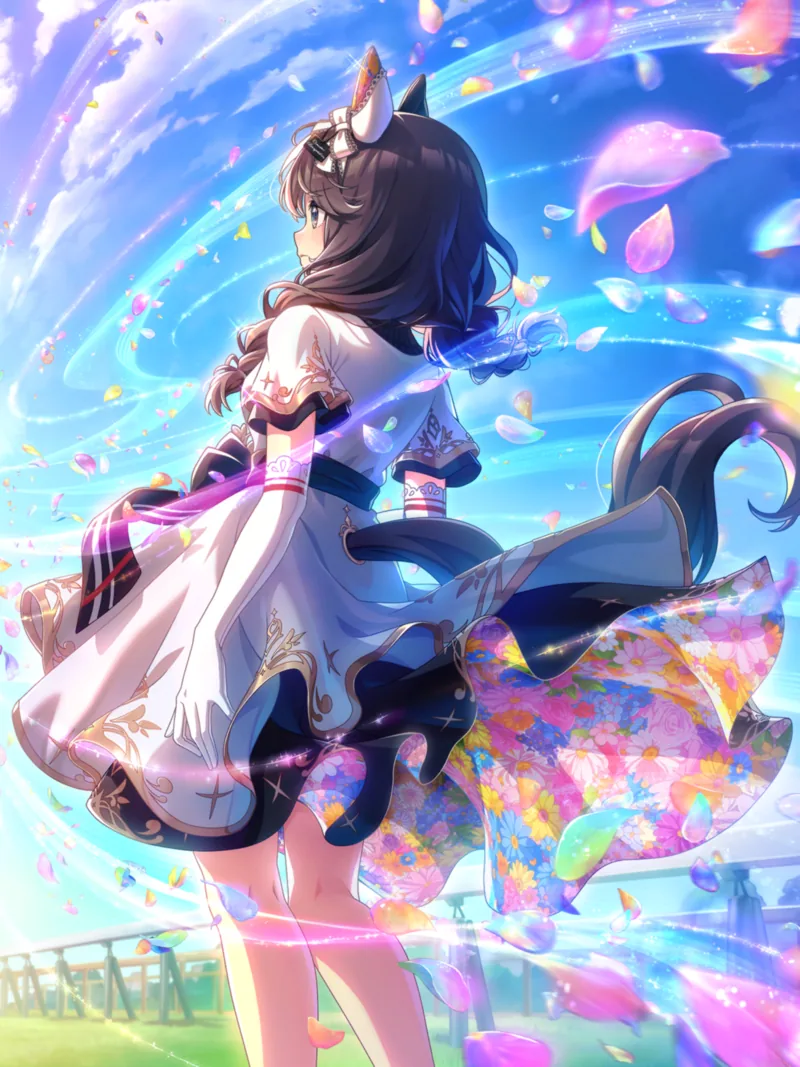
The career scenario is built on branches, and how to read them is itself a question this character makes vivid, since she is so bound up with the meaning of winning and losing. The big races split into player-dependent outcomes: she can win the Oaks, the Shuka Sho, the Tenno Sho (Spring), the Japan Cup, or she can place and lose. The win paths are the fantasy the medium offers; the placed-and-lost paths are faithful to the real horse, who ran second and third in exactly these races and never first. The honest way to read her is not to crown any single result canonical, but to notice the thing that is true in every branch: even when she wins, she is not seen. The attention goes elsewhere. Her invisibility is not a function of losing; it survives victory. That is the canonical truth, and it is darker than either a win or a loss.
The two set-piece races carry it. The Tenno Sho (Spring) is her real moment of brushing history, the filly who placed where fillies do not, and the game’s win-branch lets her actually take it while the placed-branch keeps her historic third; either way it is the race where the trainer’s light begins to dawn.
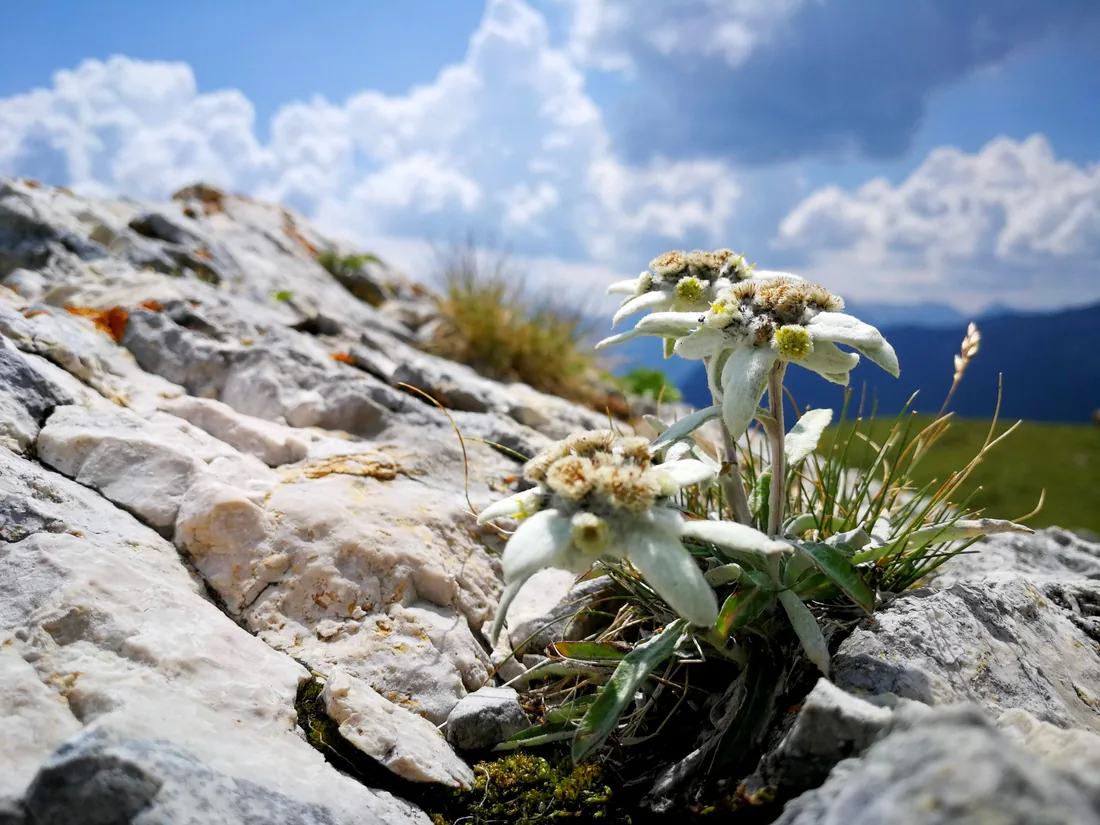
She does not walk into it on faith. Before she asks for the race she takes a week’s leave and flies to Chile, her mother’s racing country, to climb a mountain and find out whether her legs can go past their limit; the event is titled 「あなたへ捧ぐ、エーデルワイス」, an edelweiss offered to you. The party thins to four. Her mother turns back. She reaches the summit thinking only of the flower she means to hand the trainer, and goes from the airport straight to his door, suitcase still in hand. And under the courage, said only to herself, the old fear: 「あなたをこのまま――去らせは、しません」, I will not let you leave like this.
The Japan Cup is her signature, the lone filly’s race, and its four branches title themselves the golden bouquet. In the win she beats Almond Eye and is, for one day, unmistakably the center. But the three losing branches deliver the thesis the win cannot. Beaten, despairing that she has failed to assemble the golden bouquet, she is turned by the trainer to face the cheering stands:
「俺はきっと、黄金の花束を受け取れたよ」 "I think I did receive the golden bouquet."
The bouquet was never the trophy. It was the three-year walk, received in full, win or no win. That redefinition is shared across the losing branches and matches the real record, and it is the truest thing the game says about what a career of seconds was worth.
The endings divide her legacy along the same seam. The normal ending refuses to make her the great dahlia and makes her instead the small flower in the shade whose dignified bloom stays in someone’s heart, a slower child tells her that watching her earnest persistence is the reason she did not quit. That is, almost exactly, the real horse’s actual legacy: never a champion, beloved anyway, the bridesmaid fans adored for her honesty. The true ending, the flower-scape that will not come undone, gives her the victory she actually wanted, the trainer in the light at last, and then turns the lens on her one unmet need and lets her speak it. Both endings are true. She became a thing remembered, and she remained a thing afraid of being forgotten.
Part 9The Through-Line (Synthesis)
Everything above bundles into a single arrangement, and it is this.
It all grows from one place: a child in her father’s hospital, learning that flowers bring suffering people to peace, learning to call that peace harmony, and learning to see the longing in people who cannot say it aloud. That child grows into a runner who loves a race for its harmony and is broken by its arithmetic, because a race cannot be won the way a ward can be healed. There is no version of winning a race that hurts no one. She spends her whole story looking for the monk’s ending, the victory by persuasion, the bouquet in which every flower is brighter for the others, and racing will not give it to her.
What she finds instead is a substitution that is half a cure and half a cage. If she cannot win for herself without taking, she can win for someone, and call it giving. She chooses the one person whose invisibility she is built to see, and the gift she means for him remakes her: in trying to make him visible she becomes someone who believes she has the right to run. That is genuine healing, and the game lets her say so. But the cure and the wound share a single mechanism. The same logic that lets her give without guilt is the logic that keeps her at the edge of her own life, content to be the flower in the shade, and underneath even that is the oldest fear, that the one who sees her will stop, will leave, will let her go. She gives so that she will be kept. Her last wish is not for a crown but for a corner.
This is what lifts her past the sad-girl reading her nickname invites. The real Curren Bouquetd’or earned a fortune in defeats and was loved for the honesty of her losing, and the question her career leaves is the one the game actually answers: what was all that nearness worth, if it never once became a win? Her story’s reply is that the bouquet was never the trophy. It was the tending, the waiting, the three years of showing up and reaching and not-reaching, bundled one bloom at a time into something that turns out, held in the arms, to be heavy and real and gold.
She never got the win her name promised. She became, instead, the kind of presence that stays in a stranger’s heart and a child’s resolve, precisely because she never once won ugly. The flower in the shade, hoping only that its bloom might catch someone’s eye, and quietly terrified of the day no one is looking.
「あなたのために、勝ちたい。あなたのためなら――どこまでも、強く変われると、信じています」 “I want to win for you. For your sake, I believe I can change, become stronger, without end.”
Untie the ribbon and there is no tragic bridesmaid inside, and no saint of selflessness. Just a girl who could find the courage to take only by calling it giving, and who would rather be kept in a corner of the one heart that sees her than stand alone in all the light in the world.
Appendix, Lines Worth Keeping
The flowers worth pressing, with sources. Career-mode material that depends on a branch is flagged; it should not be read as the single canonical outcome.
| Line (JP) | Translation | Source |
|---|---|---|
| 争いごとは――少し、苦手かもしれません | Conflict, I might be a little bad at it | Self-introduction |
| わたしもいっしょに、花束になりたい | I want to be part of the bouquet too | Character Story (childhood) |
| 割り込んだら、ご迷惑になってしまうのでは | If I cut in, I might be a nuisance | Character Story (training) |
| 同じ熱で応えられない。不協和音を生んでしまう | I can’t answer with the same heat. I create dissonance | Character Story (crisis) |
| 相手を傷つけず、説得して勝つ | To win by persuading, hurting no one | Support card, “Bouquet’s Fist” |
| その言葉を、初めて知ったのは、あの時でした | That was the first time I learned the word (harmony) | Random Story, “A Single Flower’s Words” |
| 待つことは、喜びへの準備ですから | Waiting is preparation for joy | Character Story, Ch. 5 |
| お互いの存在が、お互いの存在を美しくする | Each one’s existence makes the other’s beautiful | Support card, “Crimson and Indigo Harmony” |
| 黄金に輝く花束を、あなたに届けたい | I want to deliver you a bouquet shining gold | Character Story, Ch. 4 / Career intro |
| あなたへ花束を渡しながら、私自身にも花束をあげていた | While handing you the bouquet, I was giving myself one too | Career, “Christmas” |
| その夢の中心が、無名の俺……だから? | Because the center of that dream is me, a nobody? | Career, after the Shuka Sho (win and loss branches) |
| やっぱり、世間の注目は、集められなかったのね | I still couldn’t gather the world’s attention | Career, after the Shuka Sho (branch-dependent) |
| 待って、嫌! 行かないで……! | Wait, no! Don’t go! | Career, “Dream and Waking Marigold” |
| みなさんの幸せには、あなた自身の幸せも含まれているべき | Your own happiness should be counted inside everyone’s | Support card, “The Definition of Happiness” |
| 君は誰より、冠がふさわしい | You deserve the crown more than anyone | Career, “Hot Spring Trip” |
| 俺はきっと、黄金の花束を受け取れたよ | I think I did receive the golden bouquet | Career, after the Japan Cup (loss branches; thematically and historically faithful) |
| なぜ、己を端に置くことに、一切のためらいがないのだろうか | Why does she put herself at the edge without a shred of hesitation? | Career, true ending (trainer) |
| 隅でも、かまいませんので――私の花束を、飾り続けて下さい | A corner is fine. Just keep my bouquet on display | Career, true ending |
| あなたのために、勝ちたい | I want to win for you | Home screen |
Translations are working renderings aimed at preserving meaning and register; the Japanese is the authority.